
As we enter 2026, investors continue to focus on precious metals as safe havens against uncertainty and inflation. A major shift is happening in global markets. While traditional assets slow down, gold, silver, and copper are entering a powerful new cycle driven by AI, clean energy, geopolitics, and supply shortages. Gold and silver experienced significant gains in last year 2025. Gold rose about 65-70%, reaching record highs of nearly $4,400-$4,500 per ounce. Silver surged by 140-150% to surpass $70 and briefly touch $77.
This article is written for the people who are interested in silver and gold investment. In this article we discussed the key insight about gold and silver, how to invest in silver and gold, where to invest in 2026. And also if you are interested in short term or long term investment then this article is for you.
Now the question is: which metal holds better potential this year?
The short answer is that silver seems ready for stronger percentage gains in 2026, driven by industrial demand and supply shortages. Gold, on the other hand, offers more stable and reliable growth as a safe-haven asset. Your choice depends on your risk tolerance: consider silver for higher upside and volatility, and gold for preservation.
Key Drivers for Both in 2026
- Monetary policy: Expected Fed rate cuts might lower opportunity costs for non-yielding metals and weaken the dollar.
- Geopolitical risks and inflation: Ongoing tensions and fiscal concerns increase safe-haven buying.
- Central bank demand: Strong for gold, with a positive spillover to silver.
- De-dollarization trends: Favor hard assets.
But these metals differ in how they perform.
Gold: The Steady Performer
Gold’s rally in 2025 was largely due to investment demand (ETFs, bars, and coins) and record purchases by central banks. In 2026, analysts expect continued support. Forecasts vary from $4,500-$4,800 (Morgan Stanley, Bank of America) to over $5,000 (J.P. Morgan, UBS, Yardeni Research even suggests up to $6,000 in optimistic scenarios). The average consensus is around $4,800-$5,000 by year-end, which implies gains of 10-30% from current levels near $4,400.
Strengths include low correlation to stocks and bonds, along with a proven track record as a hedge in uncertain times. Gold is less affected by economic slowdowns since it has minimal industrial use. However, risks include the possibility of no rate cuts or a strong rally in equities, which could diminish momentum. Gold is suitable for conservative investors or as part of a diversified portfolio, typically with a 5-10% allocation.
Learn more: Live Gold Price in Bangladesh
Silver: The High-Upside Play
Silver’s explosive growth in 2025 came from catching up to gold, as the gold/silver ratio dropped from over 100 to about 60. A majority of silver demand, over 50%, comes from industrial uses, including solar panels, electric vehicles, electronics, and AI data centers—far exceeding the industrial demand for gold. Forecasts for silver predict a range of $70-$90, while bullish expectations go beyond $100, with some projecting between $135-$150 or even $309 under extreme conditions based on Bank of America models that consider historical lows.
Supply issues continue, with multi-year deficits projected to persist, marking the fifth straight year in 2025, while mine production struggles to meet demand. Silver’s strengths lie in its affordability as “poor man’s gold” and the industrial tailwinds from the green energy boom. Historically, silver outperforms gold during the later stages of bull markets. Risks include higher volatility tied to economic growth. A recession could dampen industrial demand, leading to sharper pullbacks.
Many experts, including Yahoo Finance, Kitco, and FXEmpire, suggest that silver has better chances to outperform gold in percentage terms.
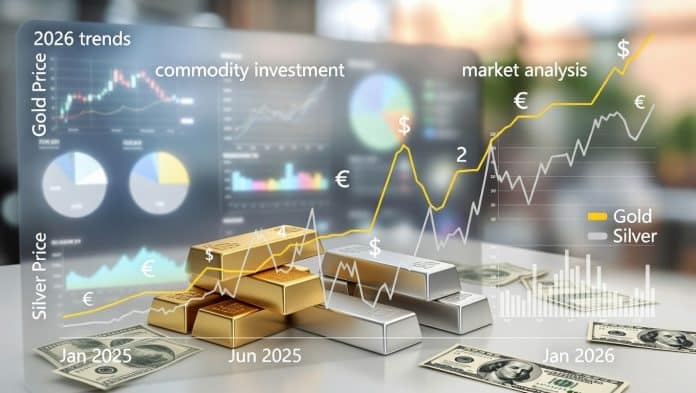
Gold vs. Silver Prices: January 2025 to January 2026
Data as of January 8, 2026. Approximate values based on market reports (Gold peaked ~$4,534 in Dec 2025; Silver ~$79). Prices fluctuate—check live sources like Kitco.
source: Gold price in Bangladesh
Gold/Silver Ratio Outlook
The current ratio is approximately 59-65, compared to the historical average of around 60, with bull market lows at 30-40. If the ratio compresses further, silver stands to gain significantly. Most predict stability or a mild drop in the ratio, which would favor silver’s outperformance.
Which Is “Best” for 2026?
For higher potential returns, analysts largely predict that silver will outperform gold in percentage terms, potentially achieving gains of 50-100% or more in optimistic scenarios, while gold may see returns of 15-30%. For stability and wealth preservation, gold remains a solid choice due to its lower volatility and stronger safe-haven status.
A balanced approach includes both metals, with a core gold position coupled with silver for growth. Investors might consider ETFs like GLD or IAU for gold and SLV or SIVR for silver.
Disclaimer:- Precious metals aren’t suitable for everyone. They can be volatile, provide no yield, and come with storage costs if you hold physical assets. Many advisors recommend limiting exposure to 5-15% of your portfolio. Given the uncertainties of 2026, including shifts in policy and geopolitical events, both metals look promising, but silver’s potential stands out for those willing to take risks. No matter your choice, focus on the long-term perspective. These assets serve as hedges, not quick investment opportunities. Be sure to consult a financial advisor about your specific situation.
Trading & Investing in the Crypto Market or share market, including equity, derivatives, commodity, and currency, involves market risk, and past performance is not indicative of future results. The risk of loss can be substantial, and it may not be suitable for everyone. Please ensure you fully understand the risks involved and invest at your own risk.
Topic covered:- silver, gold, silver price, gold price, how to invest, how to invest in gold, how to invest in silver, silver investment, silver etf, gold rate today, gold silver, gold etf, gold investment, silver rate today, investing, personal finance, investment, investing for beginners, stock market, share market, stock market for beginners, finance.